Learn how to accelerate your strategy and success with industry trends, tips, and expertise.
Can you trust an AI's opinion about your customers? Here's what simulated users actually are, and how much weight to put on them.
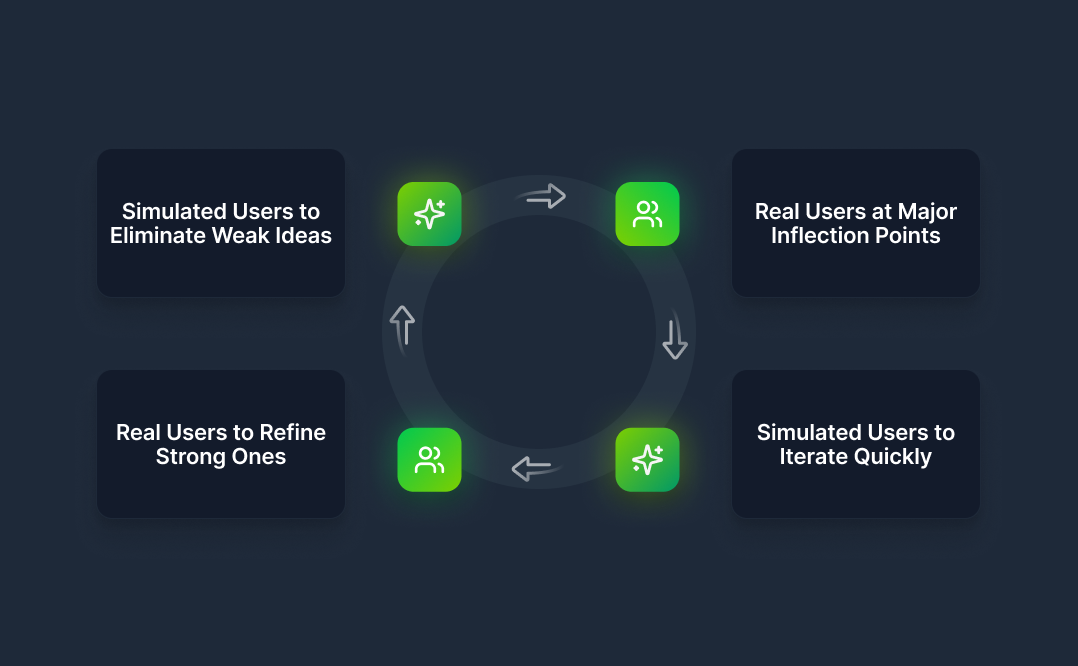
Teams that combine synthetic feedback with real customer insight can eliminate weak ideas earlier, iterate with greater confidence, and focus human research where it matters most.
Honest answers to common questions. Everything you need to know—no fluff, just facts.
Audiences → Ads → Landing Pages → ResultsA test in Viable is a simple way to see how people respond to your idea before you launch it. It brings together audiences, ads, landing pages, and results in one place. As people interact, Viable tracks what they do—showing you what actually works based on real behavior like clicks, engagement, and conversions.
Simulated users are trained to model realistic human behavior within your product. Unlike traditional test participants, these users can be rapidly deployed, tailored to your target audience, and guided through tasks using natural, human-like interactions. They behave like real users—without the time, cost, or recruitment overhead.
Yes. Viable is built for team collaboration. You can invite as many teammates as needed to participate in tests, review results, and refine messaging together. Product, marketing, and leadership teams can all work in the same workspace to align decisions around validated outcomes.
Yes. Viable allows you to transfer projects to another user or organization at any time. This makes the platform especially useful for agencies, consultants, and freelancers who are running validation work on behalf of clients. Once a project is complete, ownership can be transferred so the client can continue managing and running tests within their own workspace.
Most AI tools generate responses from general training data. Viable is built on a specialized AI infrastructure designed specifically for product and messaging validation. Instead of generic answers, Viable creates simulated audiences using thousands of behavioral and demographic data points to represent the types of users you’re trying to reach. This allows teams to test ideas, positioning, and messaging against structured audience models—so you can make decisions based on realistic feedback, not just AI speculation.